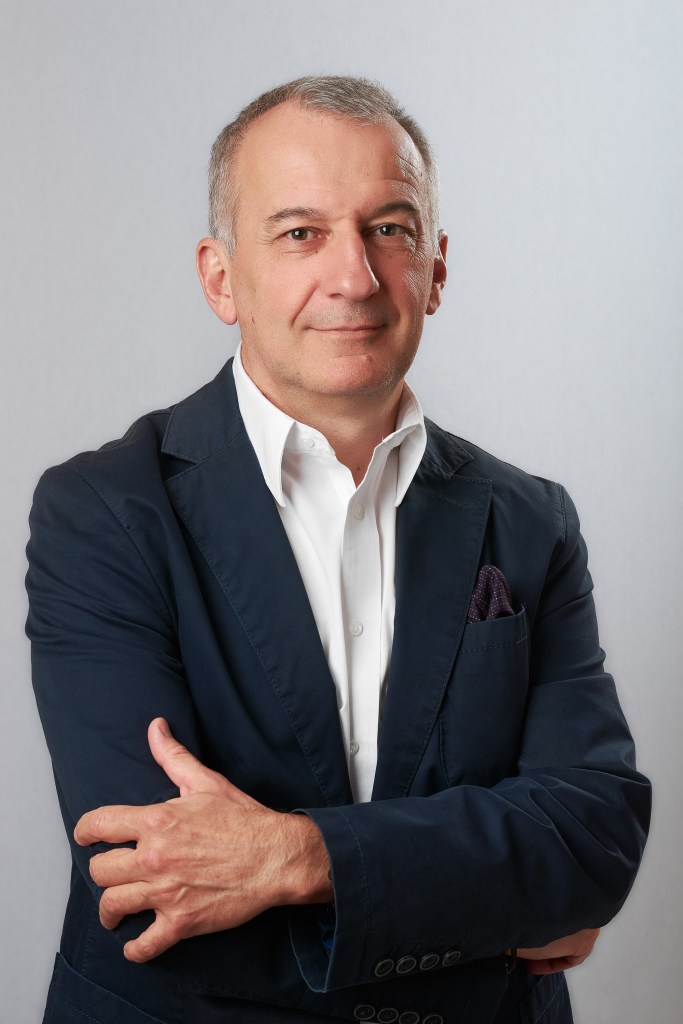
I have been pursuing research activity in the field of neurosciences since 30 years- starting as a student research society member in the field of anatomy, further extending my work in Richmond, VA as a research fellow studying proteolytic processes in traumatic axonal injury and now, conducting studies in the field of biomarker research in the clinical setup. I have entered the field of neurotrauma research in 1996 as a board certified neurosurgeon, thereby taking every effort to participate in translational research activities.
Please, note that this site is under construction…
Positions and Employment
1990-1992 research associate; Department of Anatomy, Medical University of Pécs, Hungary
1992-1996 resident in neurosurgery; Department of Neurosurgery, Medical University of Pécs, Hungary
1996-1997 assistant professor of neurosurgery; Department of Neurosurgery, Medical University of Pécs, Hungary
1997-1999 research fellow; Department of Anatomy, Medical College of Virginia Commonwealth University, Richmond, Virginia USA
1999-2006 assistant professor of neurosurgery; Department of Neurosurgery, University of Pécs, Hungary
2006-2014 associate professor of neurosurgery; Department of Neurosurgery, University of Pécs, Hungary
2014-2022 jan full professor of neurosurgery/head of the Department; Department of Neurosurgery, University of Pécs, Hungary
2022-professor of neurosurgery Örebro Universitet, Örebro, Sweden
Other Experience and Professional Memberships
1991- Hungarian Anatomical Society
1995- Hungarian Neurosurgical Society, (secretary:2002-, re-elected:2006, 2010, 2014)
1995- Hungarian Medical Chamber
1995- Hungarian Society of Neurosonology
2000-2010 Hungarian Neurotrauma Society (secretary:2005-2010)
2002- International Society for Neurochemistry
2002 „Visiting Professor” – Department of Anatomy and Neurobiology Virginia Commonwealth University, Richmond, VA
2003- European Association of Neurosurgical Societies – Individual Membership
2003- National Neurotrauma Society (USA)
2005- Hungarian Neurooncology Society
2005 Hungarian College of Neurosurgeons
2006 „Visiting Professor” – Department of Neurosurgery Virginia Commonwealth University, Richmond, VA
2007-2011 European Association of Neurosurgical Societies – Training Committee member
2008 „Visiting Professor” – Department of Anatomy and Neurobiology Virginia Commonwealth University, Richmond, VA
2011- European Association of Neurosurgical Societies – Treasurer
2011-2014 International Neurotrauma Society – Vice President
2014-2016 International Neurotrauma Society – President
2016 International Neurotrauma Society – Past President
2016 European Association of Neurosurgical Societies – Neurotrauma Committee – Member
2016 World Federation of Neurosurgical Societies – Neurotrauma Committee – Member
2018 „Visiting Professor” – Department of Neurosurgery University of Messina, Italy
2018-2020 Hungarian Neurosurgical Society – President
Honors
1997-1999 Martin Rodbel Fellowship of the Virginia Commonwealth University and the Hungarian Academy of Sciences
2000 European Association of Neurosurgical Societies Aesculap Prize
2000-2003 Bólyai Fellowship of the Hungarian Academy of Sciences
2001-2004 NIH Fogarty International Research Collaboration Award, (FIRCA)
2003-2006 Békési Scolarship of the Hungarian Academy of Sciences
2018 Markusovszky Prize of Szombathely Hospital Research Committee
Contribution to Science
Research on the pathogenesis of diffuse axonal injury
Provided the first light microscopic and ultrastructural evidence that calcium-induced, calpain-mediated spectrin proteolysis plays a pivotal role in traumatically induced axonal injury in rodents.
- Büki A, Siman R, Trojanowski JQ, Povlishock JT. The role of calpain-mediated spectrin proteolysis in traumatically induced axonal injury. J Neuropathol Exp Neurol. 1999 Apr;58(4):365-75.
First demonstrated that in a “necrotic” model of traumatic axonal injury mitochondrial damage leads to the release of cytochrome c with resultant activation of apoptotic enzyme systems, thereby caspase and calpain interact to cause axonal demise.
- Büki A, Okonkwo DO, Wang KK, Povlishock JT. Cytochrome c release and caspase activation in traumatic axonal injury. J Neurosci. 2000 Apr 15;20(8):2825-34.
As a “byproduct” of these studies with Coworkers developed a new fluorescent-electron microscopic double labelling technic.
- Büki A, Walker SA, Stone JR, Povlishock JT. Novel application of tyramide signal amplification (TSA): ultrastructural visualization of double-labeled immunofluorescent axonal profiles. J Histochem Cytochem. 2000 Jan;48(1):153-61.
Studies conducted to therapeutically influence diffuse axonal injury
The above observations provided a solid basis for therapeutic investigations where together with coworkers demonstrated that the inhibition of mitochondrial pathology prevents axonal damage. Similarly, demonstrated that a halt of proteolytic processes by the application of therapeutic hypothermia or calpain inhibitors turns into better morphological and functional outcome.
The observations on the beneficial effects of cyclosporine A on mitochondrial pathology initiated further, preclinical and later phase II clinical studies and motivated the NeuroVive Pharmaceutical Company to initiate its trail with a cyclosporine A analogue in myocardial ischemia.
- Okonkwo DO, Büki A, Siman R, Povlishock JT. Cyclosporin A limits calcium-induced axonal damage following traumatic brain injury. Neuroreport. 1999 Feb 5;10(2):353-8.
- Büki A, Okonkwo DO, Povlishock JT. Postinjury cyclosporin A administration limits axonal damage and disconnection in traumatic brain injury. J Neurotrauma. 1999 Jun;16(6):511-21.
- Büki A, Koizumi H, Povlishock JT. Moderate posttraumatic hypothermia decreases early calpain-mediated proteolysis and concomitant cytoskeletal compromise in traumatic axonal injury. Exp Neurol. 1999 Sep;159(1):319-28.
- Buki A, Farkas O, Doczi T, Povlishock JT. Preinjury administration of the calpain inhibitor MDL-28170 attenuates traumatically induced axonal injury. J Neurotrauma. 2003 Mar;20(3):261-8.
Translational biomarker studies
First demonstrated that proteolytic processes described in rats are also detectable in head injured humans providing a potential biomarker of traumatic brain injury.
- Farkas O, Polgár B, Szekeres-Barthó J, Dóczi T, Povlishock JT, Büki A. Spectrin breakdown products in the cerebrospinal fluid in severe head injury–preliminary observations. Acta Neurochir (Wien). 2005 Aug;147(8):855-61.
With Coworkers in various trials and studies identified and established potential biomarkers and elucidated their prognostic properties.
- Mondello S, Robicsek SA, Gabrielli A, Brophy GM, Papa L, Tepas J, Robertson C, Buki A, Scharf D, Jixiang M, Akinyi L, Muller U, Wang KK, Hayes RL. αII-spectrin breakdown products (SBDPs): diagnosis and outcome in severe traumatic brain injury patients. J Neurotrauma. 2010 Jul;27(7):1203-13.
- Czeiter E, Mondello S, Kovacs N, Sandor J, Gabrielli A, Schmid K, Tortella F, Wang KK, Hayes RL, Barzo P, Ezer E, Doczi T, Buki A. Brain injury biomarkers may improve the predictive power of the IMPACT outcome calculator. J Neurotrauma. 2012 Jun 10;29(9):1770-8.
Critical appraisal of contemporary biomarker studies
Under the umbrella of the CENTER TBI research project lead the group that provided the first living systematic review on the potential application of biomarkers in traumatic brain injury.
- Mondello S, Sorinola A, Czeiter E, Vámos Z, Amrein K, Synnot A, Donoghue EL, Sándor J, Wang KKW, Diaz-Arrastia R, Steyerberg EW, Menon D, Maas A, Buki A. Blood-Based Protein Biomarkers for the Management of Traumatic Brain Injuries in Adults Presenting with Mild Head Injury to Emergency Departments: A Living Systematic Review and Meta-Analysis. J Neurotrauma. (2018, in press).
- Synnot A, Gruen RL, Menon D, Steyerberg EW, Buki A, Peul WC, Elliott JH, Maas A. A New Approach to Evidence Synthesis in Traumatic Brain Injury: A Living Systematic Review. J Neurotrauma. (2018, in press).
- Maegele M, Schöchl H, Menovsky T, Maréchal H, Marklund N, Buki A, Stanworth S. Coagulopathy and haemorrhagic progression in traumatic brain injury: advances in mechanisms, diagnosis, and management. Lancet Neurol. 2017 Aug;16(8):630-647.
Establishment of the Pecs Traumatic Brain Injury Database
With Coworkers funded and further developed the Pecs Severe Traumatic Brain Injury Database now containing clinical, imaging and biomarker (follow-up) data of over 600 patients in 16 years.
The broader analysis also revealed regional inequalities and insufficiencies of the Hungarian health care system.
- Sorinola A, Buki A, Sandor J, Czeiter E. Effectiveness of Traumatic Brain Injury Management Guideline Introduction in Hungary. Turk Neurosurg. 2018;28(3):410-415.
- Nemes O, Kovacs N, Szujo S, Bodis B, Bajnok L, Buki A, Doczi T, Czeiter E, Mezosi E. Can early clinical parameters predict post-traumatic pituitary dysfunction in severe traumatic brain injury? Acta Neurochir (Wien). 2016 Dec;158(12):2347-2353.
- Nemes O, Kovacs N, Czeiter E, Kenyeres P, Tarjanyi Z, Bajnok L, Buki A, Doczi T, Mezosi E. Predictors of post-traumatic pituitary failure during long-term follow-up. Hormones (Athens). 2015 Jul-Sep;14(3):383-91.
Complete List of Published Work in MyBibliography is under upload, searchable at Hungarian Academy of Sciences webpage at: https://vm.mtmt.hu/www/index.php
Research Support
EU FP-7 – Grant no: 602150: PI: Andrew IR Maas, David K Menon; 01/10//2013-31/03//2020
Title: Collaborative European NeuroTrauma Effectiveness Research in TBI – CENTER-TBI
Goal: The aim of this multicentric, prospective, descriptive project is to re-characterize and redefine traumatic brain injury and its treatment in Europe, in conjunction with Worldwide collaborative studies.
Role: Biomarkers WP-leader
Hungarian National Research, Development and Innovation Office – Grant No. 2017-1.2.1-NKP-2017-00002: PI: Tamás Freund, Tamás Dóczi; 01/12/2017-30/11/2021
Title: Hungarian Brain Research Program 2.0
Goal: The goal of this project is to support clinical research in neuroscience where the sub-project specifically focuses on the construction of large patient database to facilitate biomarker research in traumatic brain injury.
Role: Sub-PI, project-leader
Hungarian Economic Development and Innovation Operational Programme – Grant no: GINOP-2.3.2-15-2016-00048: PI: Péter Hegyi; 01/02/2017-31/01//2021
Title: Életet veSzélyezTető Akut megbetegedések súlYossági és hALálozási mutatóInak jaVítása transzlációs orvostudományi mEgközelítésben – STAY ALIVE
Goal: The goal of this project is to support clinical research in vascular diseases of the central nervous system where the sub-project specifically focuses on the construction of large patient database to facilitate biomarker research in stroke of various origin.
Role: Sub-PI, project-leader
Hungarian Economic Development and Innovation Operational Programme – Grant no: GINOP- 2.3.3-15-2016-00032: PI: Tamás Dóczi; 01/01/2017-31/12/2019
Title: Neurorehabilitációs és ember-gép kapcsolat kutatási központ kialakítása a Pécsi Tudományegyetemen
Goal: The aim of this project is to develop a modern/complex neurorehabilitational center in the University of Pécs and investigations with innovative technologies like human-machine interfaces or implementation of robot technology to the rehabilitation of neurological patients.
Role: Sub-PI, project-leader
Hungarian Economic Development and Innovation Operational Programme – Grant no: GINOP- 2.3.3-15-2016-00013: PI: András Büki; 01/07/2016-30/07/2018
Title: Világszínvonalú neuronavigációs infrastruktúra, K+F és oktatási platform kialakítása Magyarországon
Goal: This governmental grant aims the development of new clinical research infrastructure to serve further research and development purposes. The specific task is to establish/develop intraoperative image guided navigation and 3D printing in spine surgery.
Role: PI
EFOP-3.6.2.-16-2017-00008: PI: István Ábrahám; 01/07/2017-31/10/2020
Title: The role of neuro-inflammation in neurodegeneration: from molecules to clinics
Goal: This governmental grant aims to investigate neuroinflammation and neurodegeneration following traumatic brain injury, where the sub-PI focuses on the application of image-guided, navigated transcortical magnetic stimulation in the assessment of late cognitive sequlae of traumatic brain injury in conjunction with biomarker studies.
Role: Sub-PI
Completed Research Support
Hungarian National Development Agency Grant No.: KTIA_13_NAP-A-II/8: PI: Tamás Freund, Tamás Dóczi; 01/12/2013-30/11/2017
Title: Hungarian Brain Research Program
Goal: This sub-project aimed to characterize biomarkers of traumatic brain injury and their role in outcome prediction.
Role: Sub-PI (Clinical Arm, Pecs University)
MTA/Hungarian Academy of Sciences – Research Groups Attached to Universities
MTA-PTE Clinical Neuroscience MR Research Group PI: Tamás Dóczi – membership in the research group: 01/01/2012-30/06/2017
Goal: This project aimed at the identification of imaging biomarkers in brain injury of various origin.
Role: Sub-PI
 Andras Buki
You must be logged in to post a comment.